Where to Find the Best T Mobile Map Coverage in 2026
7/29/2026
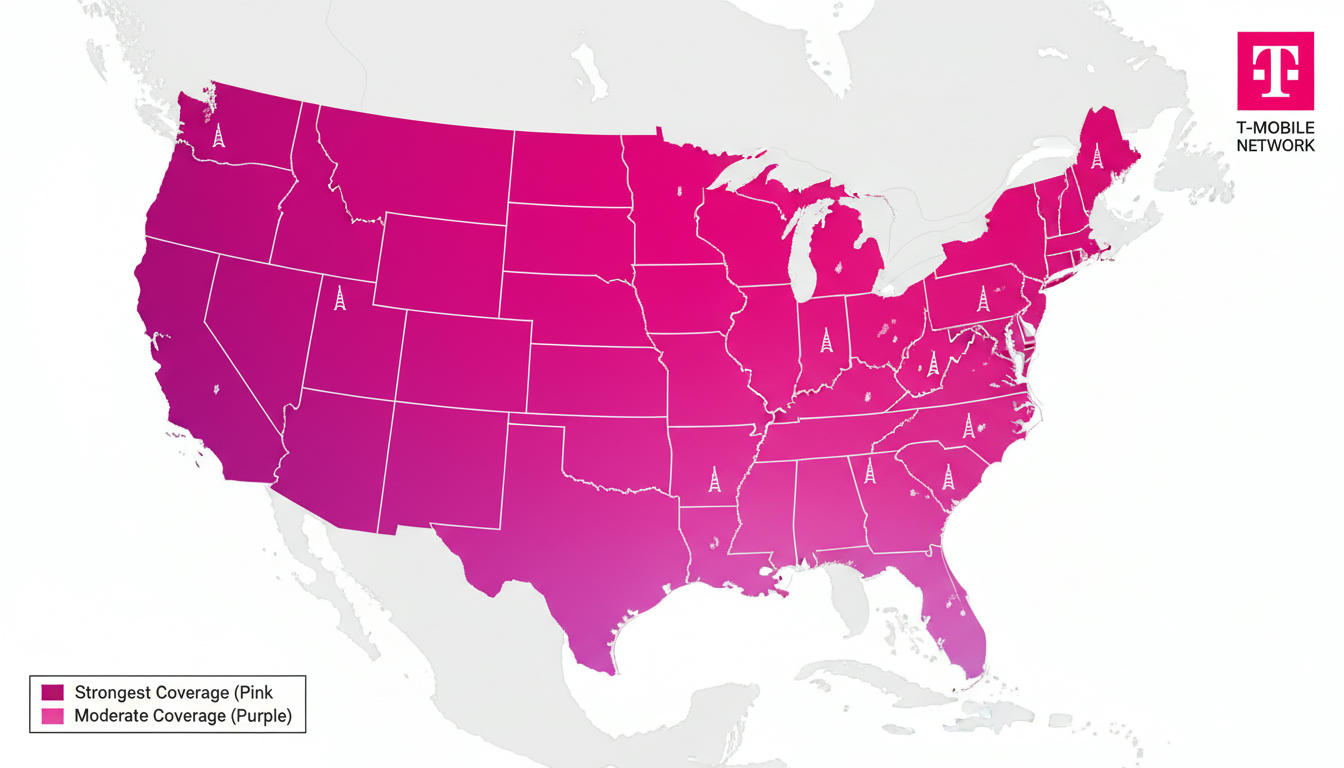
In short, what you'll discover in this article: Explore the T Mobile map to check coverage, find nearby stores or towers, and understand signal strength. Learn how to use the interactive features and interpret network data for better service decisions.
1. Introduction: What Is the T-Mobile Map and What Is It For?
The T Mobile map is an interactive tool designed to help users visualize T-Mobile’s network coverage across the United States. Whether you want to check if your area has strong signal strength, locate nearby T-Mobile stores or towers, or evaluate the quality of service before switching carriers, this map provides essential information.
It displays various network layers such as 4G LTE, 5G, and 5G+ coverage, helping you understand where T-Mobile’s service works best. This tool is especially useful if you’ve experienced spotty cell service or are comparing carriers for personal or professional reasons.
2. Accessing the T-Mobile Map
2.1 Where to Find It (Website, App)
You can access the official T Mobile coverage map directly on T-Mobile’s website at t-mobile.com/coverage/coverage-map. The map is also available through the T-Mobile app on smartphones, offering convenient access wherever you go.
2.2 Requirements and Compatibility (Account, Browser)
No account is required to view the coverage map online. However, for enhanced features like saving locations or personalized recommendations, logging in with a T-Mobile ID may be necessary.
The map works best on modern browsers such as Chrome, Firefox, Safari, and Edge. It is fully functional on both desktop and mobile devices, ensuring easy navigation whether you’re at home or on the move.
3. Using the Map: Main Features
3.1 Address Search and Navigation
The map allows you to enter any address, landmark, or ZIP code to zoom into specific locations. This feature helps you quickly check coverage in your neighborhood or any area of interest.
3.2 Filters (Technology, Indoor/Outdoor, Density)
You can customize the view by applying filters such as:
- Network technology: 4G LTE, 5G, or 5G+
- Coverage type: indoor vs. outdoor
- Signal density levels
These filters help tailor the information to your needs, whether you're checking for high-speed data availability or indoor reception quality.
3.3 Viewing Cell Details (ID, Band, Signal Strength)
Clicking on a specific cell tower or coverage area reveals detailed technical information including:
- Cell ID
- Frequency band used
- Signal strength measured in dBm
This data is valuable for tech-savvy users wanting deeper insight into network performance.
4. Understanding Displayed Coverage
4.1 Difference Between 4G / 5G / 5G+
The map distinguishes between different network generations:
- 4G LTE: Standard high-speed mobile internet widely available.
- 5G: Next-generation faster speeds with lower latency.
- 5G+: Enhanced ultra-fast mmWave technology available in select urban areas.
Knowing these differences helps set expectations about speed and reliability in your location.
4.2 Interpreting Colors/Values and dBm
Coverage areas are color-coded to indicate signal quality:
- Darker colors usually represent stronger signals.
- Lighter shades indicate weaker coverage.
- Signal strength values (dBm) provide precise measurements; closer to zero means better signal.
Understanding these visuals aids in assessing whether your device will perform well outdoors or indoors.
5. Checking Eligibility and Service Quality
5.1 Additional Tests (Speed, Latency)
While the T Mobile signal map shows coverage availability, real-world performance depends on factors like network congestion and device compatibility. Running speed tests and latency checks using apps can complement map data for a fuller picture.
5.2 Tips for Rural Areas and Indoor Coverage
In rural zones or buildings with thick walls, signal strength may vary despite appearing covered on the map. Consider:
- Using Wi-Fi calling indoors
- Checking for nearby small cells or boosters
- Consulting customer support if issues persist
6. Comparisons and Limitations of the Map
6.1 Comparing with Other Carriers (Recommended Method)
To make informed choices, compare T-Mobile’s coverage with competitors using their official maps side by side. This approach helps identify which carrier offers better service in your specific area without relying solely on marketing claims.
6.2 Limitations of Map Data and Update Frequency
Keep in mind:
- Coverage maps are approximations based on network data.
- Real-world conditions like terrain and weather affect signal.
- Maps update periodically but may lag behind recent infrastructure changes.
Use them as guides rather than guarantees of perfect service.
7. For Developers and Businesses
7.1 API Access, Data Export, and Integration Use Cases
T-Mobile offers APIs for developers interested in integrating coverage data into apps or services. These tools enable businesses to build custom solutions like location-based services or network planning tools using official network data.
7.2 Pricing and Terms of Use (If Applicable)
Access to advanced data feeds may involve licensing fees or usage agreements depending on scale and purpose. Contact T-Mobile’s business support for detailed terms.
8. Troubleshooting Common Issues
8.1 Common Cases and Solutions (Incorrect Map Data, Missing Info)
If you notice discrepancies such as missing coverage spots or outdated information:
- Clear browser cache
- Try a different device or browser
- Report errors via T-Mobile’s support channels
8.2 When to Contact Support
Persistent issues with coverage not matching map predictions warrant contacting customer support for diagnostics or potential network fixes.
9. Conclusion and Practical Recommendations
The T Mobile map is an invaluable resource for checking network availability before choosing a plan or troubleshooting connectivity problems. Use its interactive features to explore coverage details tailored to your location.
For travelers interested in staying connected abroad—especially in Brazil—consider exploring eSIM options that leverage reliable local networks; internal resources like eSIM for Brazil Tourist can guide you through seamless connectivity solutions.
10. Appendices / Useful Resources
10.1 Glossary (Technical Terms: dBm, Cell ID, Band)
- dBm: A unit measuring signal strength; higher values (closer to zero) mean stronger signals.
- Cell ID: Unique identifier of a cellular tower.
- Band: Frequency range used by the network; affects speed and penetration.
10.2 Official Links and Third-Party Tools
For official maps and support visit:
Third-party tools can supplement your analysis but always cross-check with official sources for accuracy.
By leveraging these insights about the T Mobile map, you can confidently assess coverage quality and make better-informed decisions about your mobile service needs.
FAQ
How do I access the T Mobile coverage map?
You can access the T Mobile coverage map on T-Mobile’s official website or through their smartphone app. No account is needed for basic viewing, but logging in offers extra features like saving locations.
What network types are shown on the T Mobile map?
The map displays 4G LTE, 5G, and 5G+ coverage layers. Each represents different speeds and technologies, helping you understand where faster or more reliable service is available.
Can I find T Mobile store locations on the map?
Yes, the interactive map allows you to locate nearby T-Mobile stores and towers by entering an address or ZIP code, making it easy to find service centers close to you.
Why might my real signal differ from the map’s coverage?
Real-world signal can vary due to terrain, building materials, network congestion, and device compatibility. The map shows estimated coverage but testing speed and latency helps confirm actual performance.
How often is the T Mobile coverage map updated?
The coverage map updates periodically to reflect network changes, but there may be delays after new infrastructure is added. It’s best used as a guide rather than a guarantee of perfect service.

Marina Costa
Marina is a travel writer who has crossed Brazil from Rio to the Amazon. At Brazil eSIM she compares Claro, Vivo and TIM data plans and helps visitors stay online without roaming fees.