Best Mobile Data Options for Brazil Travel in 2026
7/1/2026
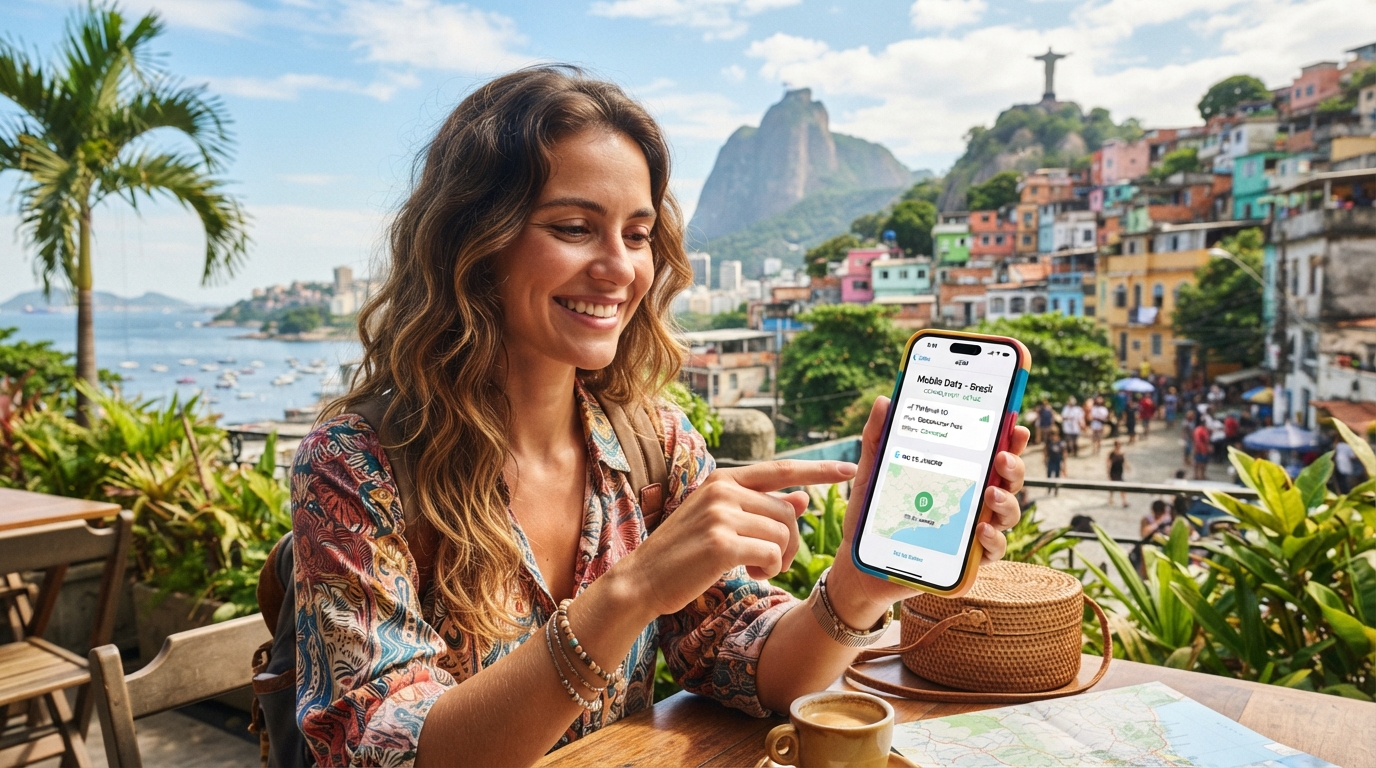
In short, what you'll discover in this article: Explore the best mobile data options for Brazil travel, including prepaid SIM cards, eSIM plans, and international roaming. Learn how to stay connected affordably and conveniently with tips on coverage, activation, and saving data during your trip.
1. Introduction — Why Prepare Your Mobile Connection Before Traveling to Brazil
Staying connected while traveling in Brazil is essential for navigation, communication, and sharing your experience. Preparing your mobile data plan ahead of time ensures you avoid high roaming fees and unreliable Wi-Fi.
Understanding the available options will help you choose the best solution tailored to your travel needs.
2. What Are the Mobile Data Options in Brazil?
2.1 Local Prepaid SIM Card — Advantages and Disadvantages
A Brazilian mobile data plan via a prepaid SIM card is a popular choice for travelers. You can purchase these SIM cards at airports, local shops, or official carrier stores.
Benefits include affordable rates and good coverage in urban areas.
However, the process may require presenting identification documents like a passport, and activation can sometimes be slow. Also, prepaid SIMs may not be ideal if you have an unlocked phone incompatible with Brazilian networks.
2.2 eSIM — Compatibility, Activation, and Recommended Providers
The eSIM is an increasingly convenient option for travelers with compatible smartphones. It allows instant activation without needing a physical card.
Providers like Claro, Vivo, and TIM offer eSIM plans tailored for visitors.
Activation usually involves scanning a QR code and configuring APN settings. The eSIM offers flexibility, especially for short stays or digital nomads who want to switch plans easily without swapping physical SIMs.
2.3 International Roaming — When to Keep It and How Much It Costs
International mobile data for Brazil via your home carrier can be convenient but often expensive. Some global providers offer roaming packages covering Brazil at premium rates.
If you plan a brief visit or want hassle-free connectivity upon arrival, roaming might be suitable. However, for longer stays or heavy data use, local options are more cost-effective.
2.4 Pocket Wi‑Fi / MiFi and Tethering
Pocket Wi-Fi devices provide portable internet by connecting to local networks and sharing data via Wi-Fi signals. This option suits groups or travelers with multiple devices but requires renting or buying hardware.
Tethering from a local SIM or eSIM-enabled phone is another way to share mobile data but depends on your primary connection’s speed and coverage.
3. Cost vs Performance Comparison
3.1 Price per GB and Examples of Prepaid Plans
Brazilian prepaid SIM cards typically offer plans starting around 25 BRL (~$4 USD) for 1.5 GB of data with additional benefits like unlimited national calls or WhatsApp access for a limited period.
eSIM plans vary but often provide competitive pricing with instant activation and flexible durations.
3.2 Best Options Based on Length of Stay (Short vs Long Trips)
- Short stays (3–10 days): eSIMs or tourist prepaid SIM cards are ideal for quick setup and moderate data needs.
- Long stays: Consider larger prepaid packages or monthly plans from major carriers to maximize value.
3.3 Tips to Save Data
- Use offline maps and apps.
- Connect to trusted Wi-Fi when available.
- Disable background app refresh.
- Monitor data usage regularly through phone settings.
4. Coverage and Network Quality
4.1 Coverage Map by Region (Cities vs Rural/Amazon)
Mobile data coverage in Brazil is strongest in major cities like Rio de Janeiro and São Paulo but can be patchy in rural areas or the Amazon rainforest.
Travelers venturing into remote regions should prepare accordingly with offline resources or specialized satellite communication if necessary.
4.2 Main Operators and Differences (Summary Comparison)
The main operators are:
- Claro: Wide coverage with good urban and rural reach.
- Vivo: Known for fast speeds in cities.
- TIM: Competitive prices with decent coverage.
Choosing between them depends on your itinerary and priorities like speed versus cost.
5. Buying and Activating a SIM/eSIM in Brazil
5.1 Where to Buy (Airports, Shops, Online) and Required Documents
You can buy prepaid SIM cards at airports upon arrival or at carrier stores throughout cities. Online purchase of eSIMs before traveling is also possible through providers like brazil-esim.com.
Bring your passport as identification; some providers require registration for activation due to local regulations.
5.2 Activation Steps (APN, eSIM QR Code, Common Issues & Solutions)
- Insert the SIM card or scan the eSIM QR code.
- Configure APN settings if not automatic.
- Restart your device.
- Contact provider support if connectivity issues arise.
Following guides such as this detailed activation tutorial can simplify the process.
6. Security and Settings You Should Know
6.1 Using a VPN and Risks of Public Networks
Public Wi-Fi networks can expose your data to risks; using a VPN enhances security by encrypting your connection when accessing sensitive information abroad.
6.2 APN Settings and Configuration Recommendations
Correct APN settings ensure proper mobile internet access; providers usually supply these details during activation or on their websites.
7. Practical Scenarios and Recommendations by Traveler Profile
7.1 Short-Term Tourist (3–10 Days)
Choose an eSIM or prepaid SIM with moderate data allowance for easy setup and cost efficiency.
7.2 Long-Term Traveler / Digital Nomad
Opt for monthly prepaid plans or flexible eSIM subscriptions offering larger data volumes at better rates.
7.3 Travel in Remote Areas (Amazon, Pantanal)
Prepare offline maps; consider satellite communication devices if venturing far from cellular coverage zones.
8. Pre-Departure and Arrival Checklist
8.1 Check Phone Compatibility
Ensure your smartphone supports Brazilian network bands (2G/3G/4G LTE) and eSIM functionality if applicable.
8.2 Save Offline Maps & Emergency Contacts
Download maps offline before arrival; save emergency numbers locally on your device.
8.3 Useful Numbers & Procedures in Case of Issues
Keep carrier customer service numbers handy; know where to find local support centers if needed.
10. Conclusion and Call-to-Action
Choosing the best mobile data for Brazil travel depends on your trip length, budget, and connectivity needs. Whether you pick a prepaid SIM card at the airport, activate an eSIM before departure via brazil-esim.com, or rely on international roaming briefly, planning ahead ensures smooth communication throughout your journey.
Explore verified plans now to stay connected from Rio de Janeiro’s vibrant streets to the depths of the Amazon without unexpected roaming fees!
FAQ
How do I activate an eSIM for Brazil travel?
To activate an eSIM in Brazil, scan the provider’s QR code and configure the APN settings if needed. Restart your device to finalize activation. Many providers offer online support to help with common issues during setup.
What are the benefits of using a prepaid SIM card in Brazil?
Prepaid SIM cards offer affordable data rates and good coverage in urban areas. They require ID for purchase and may have slower activation. They are ideal for travelers with unlocked phones compatible with Brazilian networks.
Is international roaming a cost-effective option in Brazil?
International roaming can be convenient for short visits but is usually expensive. For longer stays or heavy data use, local prepaid SIMs or eSIM plans provide better value and coverage.
Which mobile operators provide the best coverage in Brazil?
Claro offers wide coverage including rural areas, Vivo is known for fast city speeds, and TIM provides competitive prices with decent coverage. Your choice depends on your travel locations and priorities.
How can I save mobile data while traveling in Brazil?
Save data by using offline maps and apps, connecting to trusted Wi-Fi networks, disabling background app refresh, and regularly monitoring your data usage through phone settings.

Marina Costa
Marina is a travel writer who has crossed Brazil from Rio to the Amazon. At Brazil eSIM she compares Claro, Vivo and TIM data plans and helps visitors stay online without roaming fees.