Best Mobile Internet Options for Brazil Tourists in 2026
6/26/2026
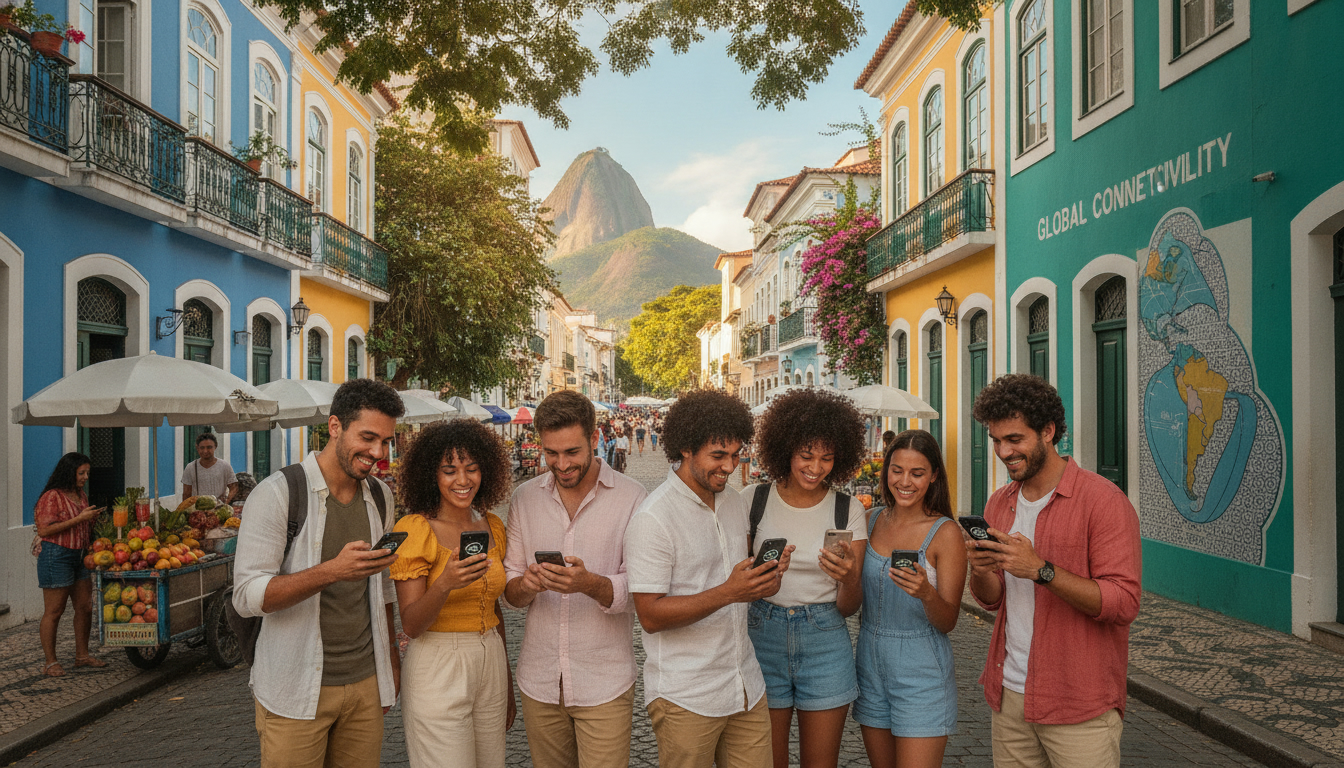
In short, what you'll discover in this article:
Explore the best mobile internet Brazil tourist options, including eSIMs, physical SIM cards, and pocket Wi-Fi. Learn where to buy, how to activate, and which providers offer the best coverage and prices for your trip.
1. Introduction — Why a Guide on Mobile Internet for Tourists in Brazil
Staying connected while traveling in Brazil is essential for navigation, communication, and safety. However, choosing the right mobile internet plan can be confusing due to multiple providers, coverage differences, and options like eSIMs or physical SIM cards.
This guide helps tourists understand the best ways to get reliable internet access without roaming fees, ensuring a smooth and connected travel experience.
2. Quick Summary — Which Option to Choose Based on Your Stay Duration
- Short trips (up to 2 weeks): Consider prepaid eSIM plans or physical SIM cards with generous data packages.
- Medium stays (2–4 weeks): Opt for local SIM cards from major operators like Vivo or Claro for better value.
- Long stays (over 1 month): Combine prepaid SIM cards with top-ups or rent a pocket Wi-Fi device for flexibility.
3. eSIM vs Physical SIM
3.1 Advantages and Disadvantages of the eSIM
The eSIM Brazil offers instant activation without visiting a store. It’s perfect for travelers with compatible phones who want hassle-free setup and digital management of their data plans.
Providers like Claro and Holafly offer generous tourist data packages with 24/7 support in English.
Advantages:
- Instant activation via QR code
- No physical card needed
- Easy switching between plans
- Often better for short trips
Disadvantages:
- Requires a compatible device
- Limited support for dual-SIM setups on some phones
3.2 Advantages and Disadvantages of the Physical SIM
Physical SIM cards remain popular among tourists who prefer traditional setups or have phones without eSIM support. Buying a Brazil prepaid SIM at airports or operator stores is straightforward but may involve queues.
Advantages:
- Works with all unlocked phones
- Wide availability at airports and shops
- Can be combined with eSIM for dual-SIM use
Disadvantages:
- Requires physical handling and insertion
- Possible waiting times at purchase points
3.3 When to Prefer Renting Pocket Wi-Fi
Pocket Wi-Fi devices are ideal for groups or travelers needing multiple connections simultaneously. They offer unlimited data but require carrying an extra device and charging it regularly.
4. Where to Buy a SIM in Brazil
4.1 Airports — Prices, Queues, and Tips
Major airports like São Paulo Guarulhos and Rio de Janeiro Galeão have kiosks selling Brazil SIM cards. Prices are slightly higher than city stores but convenient upon arrival.
Expect some waiting time during peak hours.
4.2 Operator Stores and Retail Points in Cities
Vivo, TIM, Claro, and Oi have official stores in urban centers offering various prepaid plans tailored for tourists. Staff often assist with activation and APN settings.
4.3 Online Purchase / eSIM Resellers (Airalo, Holafly, Others)
For convenience, buying an eSIM Brazil online before departure is recommended. Platforms like Airalo and Holafly provide instant delivery of QR codes with verified discount codes and flexible data plans.
5. Operator Comparison (Vivo, TIM, Claro, Oi)
5.1 Coverage and Performance by Region
| Operator | Coverage in Major Cities | Rural & Amazon Coverage | 4G/5G Availability |
|---|---|---|---|
| Vivo | Excellent | Good | Yes (4G & growing 5G) |
| TIM | Very Good | Moderate | Yes (4G & limited 5G) |
| Claro | Excellent | Moderate | Yes (4G & expanding 5G) |
| Oi | Good | Limited | Mainly 4G |
5.2 Recommended Plans Examples (Duration / Data / Price)
- Vivo Tourist Plan: 30 days unlimited internet ideal for short stays (Vivo Tourist Plan)
- Claro eSIM: Flexible digital plans with English support perfect for international visitors (Claro Guide)
- TIM Prepaid: Affordable data packages suitable for longer trips
6. Coverage and Performance According to Tourist Destinations
6.1 Major Cities (Rio de Janeiro, São Paulo, Salvador)
All major operators provide strong coverage with fast mobile internet Brazil tourist visitors expect in these urban hubs.
6.2 Rural Areas and Amazon — Limits and Solutions
Coverage drops significantly in remote areas like the Amazon rainforest; consider combining local SIMs with portable Wi-Fi rental or satellite options if venturing off-grid.
7. Activation and Practical Settings
7.1 Step-by-Step Activation for Physical SIM
- Insert the SIM card into your unlocked phone
- Follow operator instructions or visit an official store for activation help
- Configure APN settings if needed (common settings available online)
7.2 Step-by-Step Activation for eSIM (QR Code, Code, Operator Support)
- Purchase your eSIM online or at a store
- Scan the QR code provided by the operator or reseller
- Follow on-screen instructions to install the profile
- Contact support if issues arise
For detailed activation steps, see our Brazil eSIM activation guide.
7.3 Common APN Settings and Troubleshooting
Most Brazilian operators use simple APN configurations; check your provider’s website or customer service if you experience connectivity issues.
8. Daily Use and Tips for Tourists
8.1 Tethering / Hotspot Usage and Limits
Sharing your mobile internet via hotspot is generally allowed but watch out for data caps or speed throttling on some plans.
8.2 Managing Credit, Top-Ups, and Validity Extensions
Top up your prepaid SIM easily via operator apps or authorized retailers to extend validity during your stay.
8.3 Online Security, VPNs, and Banking
Use VPNs when accessing sensitive information over public networks to protect your privacy while using mobile internet Brazil tourist plans.
9. Special Cases and Tips
9.1 Festivals and High Traffic Periods (Carnival)
Expect network congestion during events like Carnival; having a backup plan such as a pocket Wi-Fi rental can ensure continuous connectivity.
9.2 Using Dual-SIM and Combining eSIM + Physical SIM
Many modern smartphones support dual-SIM setups allowing you to use both an eSIM Brazil plan alongside a physical SIM card simultaneously.
9.3 Short-Term Pocket Wi-Fi Rental vs Local SIM Card
Pocket Wi-Fi suits groups needing multiple devices connected; local SIM cards are more cost-effective for solo travelers focused on data usage.
10. Quick FAQ (Typical Prices, Required Documents, Compatibility)
Typical prices range from $15 to $50 depending on data volume and duration; most operators require passport ID for registration; ensure your phone is unlocked before buying any Brazil prepaid SIM.
11. Pre-Departure Checklist (Unlocking Phone, Apps, Offline Maps)
- Unlock your phone before travel
- Download operator apps for easy top-ups
- Save offline maps of key destinations
Prepare well to avoid connectivity issues upon arrival.
12. Conclusion — Final Recommendations and Recommended Packs
For most tourists seeking convenience and reliable coverage in Brazil, the best option is purchasing an eSIM Brazil plan online before departure combined with a local physical SIM if staying longer than two weeks. Operators like Vivo and Claro offer excellent coverage in cities while pocket Wi-Fi rentals provide backup during festivals or remote trips.
Explore detailed Brazil travel data SIM plans to find the perfect fit tailored to your itinerary—stay connected effortlessly from Rio de Janeiro to the Amazon without roaming fees!

Marina Costa
Marina is a travel writer who has crossed Brazil from Rio to the Amazon. At Brazil eSIM she compares Claro, Vivo and TIM data plans and helps visitors stay online without roaming fees.