Does T-mobile Work in Brazil with Reliable Coverage in 2026
8/28/2026
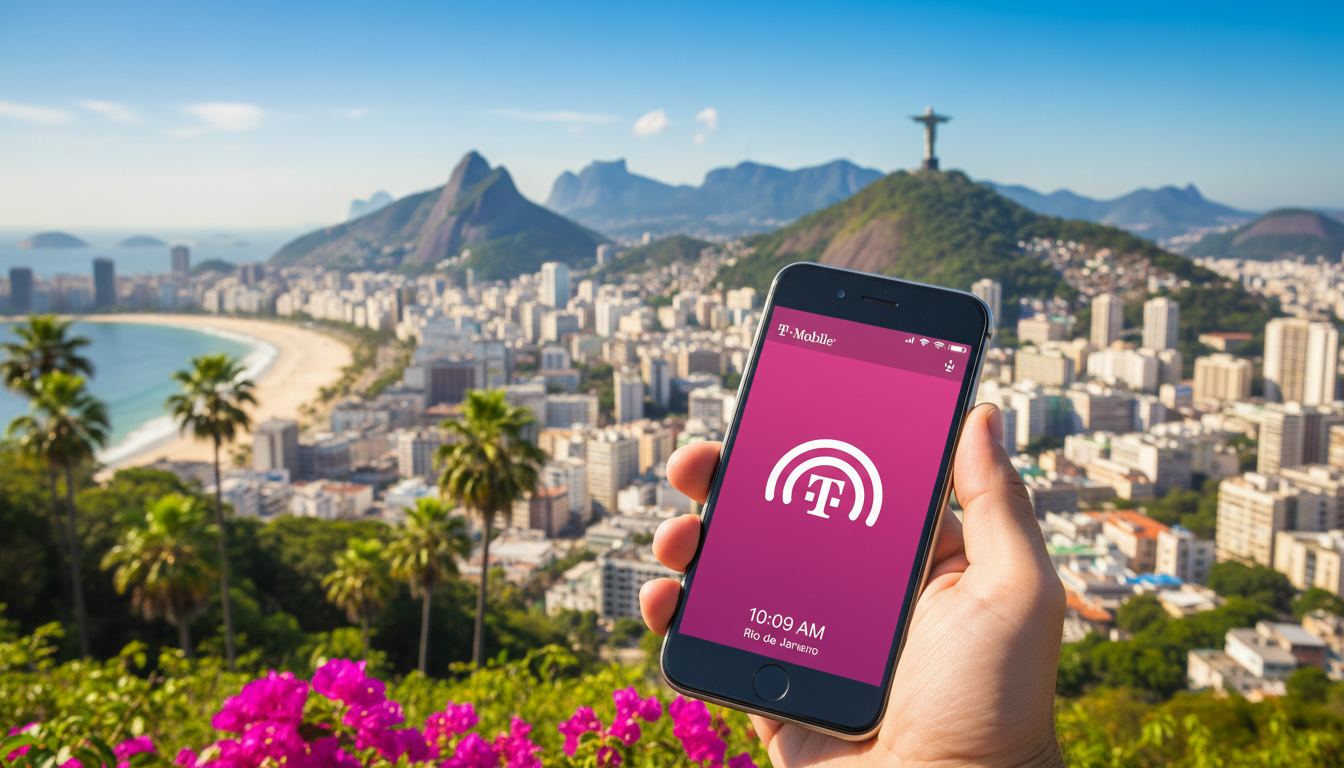
In short, what you'll discover in this article: Whether your T-Mobile phone works in Brazil, how T-Mobile’s coverage and roaming operate there, and what options you have for staying connected affordably and reliably during your trip.
1. Does T-Mobile Work in Brazil? A Quick Answer
Yes, T-Mobile does work in Brazil. Travelers can use their T-Mobile phones thanks to international roaming agreements with local Brazilian carriers.
However, coverage quality and costs vary depending on your plan and location, so understanding the details before your trip is essential.
2. In Practice: Coverage and Local Partners
2.1 Main Partner Operators (Vivo, TIM, Claro) and Frequency Bands Used
T-Mobile partners with major Brazilian carriers such as Vivo, TIM, and Claro to provide roaming services. These operators cover a wide range of frequency bands compatible with many T-Mobile devices:
- Vivo: Uses bands including Band 3 (1800 MHz), Band 7 (2600 MHz), and Band 28 (700 MHz).
- TIM: Covers Band 3 (1800 MHz), Band 7 (2600 MHz), and Band 28 (700 MHz).
- Claro: Operates on Band 3 (1800 MHz), Band 7 (2600 MHz), and Band 28 (700 MHz).
T-Mobile phones primarily support Band n71 (600 MHz), Band 5 (850 MHz), and Band 4 (1700/2100 MHz), which aligns well with these Brazilian networks for roaming compatibility.
2.2 4G/5G Coverage in Urban vs. Rural Areas
In major cities like São Paulo, Rio de Janeiro, and Brasília, you can expect solid 4G LTE coverage with some emerging 5G availability through partner networks. Rural or remote areas may have limited or no coverage, so plan accordingly if you intend to travel beyond urban centers.
3. Which T-Mobile Plans Work in Brazil?
3.1 Magenta, Magenta MAX, Essentials: Differences for International Use
- Magenta and Magenta MAX plans include international texting and data at no extra charge in over 210 countries, including Brazil.
- The Essentials plan offers limited international features; roaming data might incur additional fees.
- Magenta MAX provides higher-speed data allowances abroad compared to other plans.
3.2 International Passes and Paid Options
If your plan doesn’t cover Brazil or you want faster speeds without throttling, T-Mobile offers international passes such as the International Pass for daily or monthly use. These passes provide high-speed data at a fixed price during your stay.
4. Before You Go: Preparation and Activation
4.1 Check Phone Unlock Status and Enable Roaming
Make sure your phone is unlocked and registered on T-Mobile’s U.S. network before traveling.
Also, enable Data Roaming in your phone settings to access local Brazilian networks.
4.2 eSIM vs Physical SIM: How to Choose and Activate
T-Mobile supports eSIM technology, which can be convenient for international travel without swapping physical SIM cards. Alternatively, you can use a local Brazilian SIM card for potentially better rates.
For travelers interested in eSIM options tailored for Brazil, visit https://brazil-esim.com/blog/esim-brazil for comprehensive data plans comparison.
5. Settings and Troubleshooting On-Site
5.1 APN, SMS/MMS, and Common Issues (No Network, Slow Data)
If you experience connectivity issues:
- Verify the Access Point Name (APN) settings match those recommended by T-Mobile or the local carrier.
- Restart your device after enabling roaming.
- If SMS or MMS don’t work properly, check messaging settings or contact support.
5.2 VoLTE and Wi-Fi Calling: Compatibility and Settings
VoLTE may not always be available on Brazilian networks while roaming. Wi-Fi Calling can help maintain call quality when connected to Wi-Fi but requires activation before departure.
6. Costs and Billing Examples
6.1 Usage Scenarios and Cost Estimates
Using T-Mobile’s included international features on Magenta plans typically avoids roaming charges for moderate data use. However:
- Heavy data users might face throttling or additional fees without a pass.
- Essentials plan users should expect pay-as-you-go rates.
6.2 How to Avoid Fees (Wi-Fi Use, Passes, Disabling Data Roaming)
To minimize costs:
- Use Wi-Fi whenever possible.
- Purchase an international pass if needed.
- Turn off mobile data roaming when not required.
7. Recommended Alternatives
7.1 Buying a Local SIM or Third-Party eSIM: Where and How (Indicative Prices)
For longer stays or heavy usage, consider purchasing a local SIM card from Vivo, TIM, or Claro at airports or shops in Brazil.
Alternatively, third-party eSIM providers like eSIM.dog or Roamic offer affordable prepaid plans starting around $3 for short durations—ideal for travelers wanting instant activation without physical cards.
Explore detailed guides on obtaining eSIMs in Brazil at https://brazil-esim.com/blog/how-to-get-esim-in-brazil.
7.2 Pocket Wi-Fi and Other Solutions for Long-Term Travelers
Renting a pocket Wi-Fi device can be an option for groups or extended stays but usually comes at higher costs than SIM or eSIM plans.
8. On-the-Ground Tips
8.1 Expected Speeds in Major Cities vs Remote Areas
Expect fast LTE speeds in urban centers but prepare for slower connections outside cities due to limited infrastructure.
8.2 Emergency Numbers, T-Mobile Support from Brazil, Useful Portuguese Phrases
- Emergency number in Brazil: 190 (police), 192 (ambulance).
- Contact T-Mobile customer service via app or international number.
- Useful phrase: “Meu telefone não está funcionando” (“My phone is not working”).
9. Conclusion
T-Mobile phones do work in Brazil with good coverage through local partners like Vivo, TIM, and Claro—especially in cities where LTE is widespread. Choosing the right plan or adding an international pass can save you from unexpected fees while keeping you connected safely during your travels.
For travelers seeking flexible connectivity options beyond roaming, exploring local SIM cards or eSIM plans is highly recommended; check out brazil-esim.com for detailed comparisons of the best eSIM providers verified by MyBestSim.
Stay connected smartly on your Brazil trip!
FAQ
Does T-Mobile provide reliable coverage throughout Brazil?
T-Mobile offers reliable coverage in major Brazilian cities like São Paulo and Rio de Janeiro through partnerships with Vivo, TIM, and Claro. However, coverage may be limited or unavailable in rural and remote areas, so plan accordingly if traveling outside urban centers.
Which T-Mobile plans include international roaming in Brazil?
Magenta and Magenta MAX plans include international texting and data in Brazil at no extra charge, while the Essentials plan has limited features and may incur additional fees. Magenta MAX offers higher-speed data allowances abroad compared to other plans.
How can I activate roaming on my T-Mobile phone for Brazil?
Before traveling, ensure your phone is unlocked and registered on T-Mobile’s U.S. network. Enable Data Roaming in your phone settings to access local Brazilian networks. You can also choose between using an eSIM or a physical SIM card for connectivity.
What are cost-saving tips for using T-Mobile in Brazil?
To avoid extra fees, use Wi-Fi whenever possible, purchase an international pass for high-speed data if needed, and disable mobile data roaming when not required. These steps help minimize roaming charges during your stay.
Are there alternatives to T-Mobile roaming for staying connected in Brazil?
Yes, travelers can buy local SIM cards from Vivo, TIM, or Claro for better rates or use third-party eSIM providers offering prepaid plans. Renting pocket Wi-Fi devices is another option, though usually more expensive than SIM or eSIM solutions.

Marina Costa
Marina is a travel writer who has crossed Brazil from Rio to the Amazon. At Brazil eSIM she compares Claro, Vivo and TIM data plans and helps visitors stay online without roaming fees.