How to Avoid Data Roaming Charges with eSIM in Brazil
7/24/2026
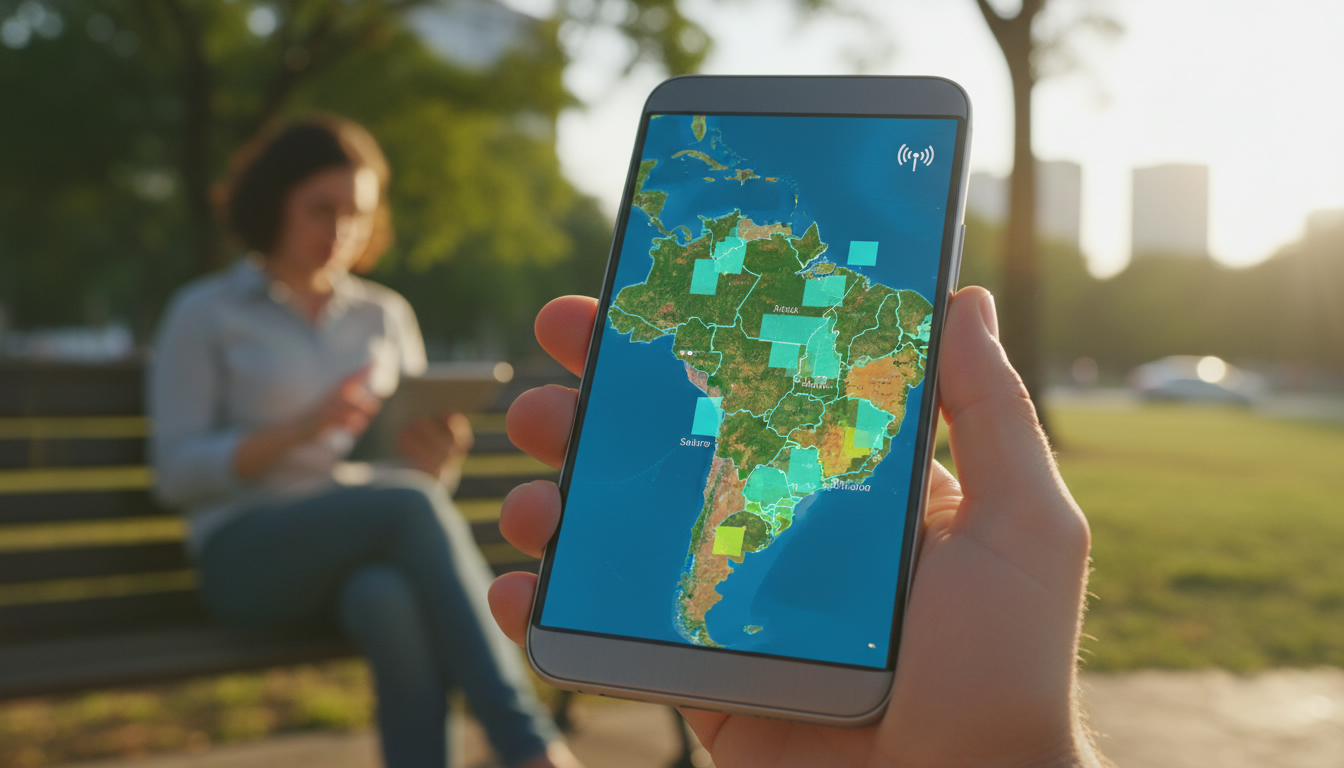
In short, what you'll discover in this article: Learn what data roaming is, why it matters when traveling abroad, especially in Brazil, and how to avoid costly roaming fees. Get practical tips on managing your phone settings, alternatives like eSIMs, and how to stay connected without surprises.
1. What Is Data Roaming?
1.1 Definition and How Data Roaming Works
Data roaming refers to the ability to use your mobile phone’s data services outside your home network coverage area by connecting to a foreign network. When you travel abroad, your phone may automatically connect to a local carrier’s network to provide internet access, calls, and texts.
This service enables you to stay online even when you’re outside your usual service area.
However, this convenience often comes with extra costs because your home carrier pays the foreign network for usage and passes those fees on to you. Understanding how data roaming functions helps you control your mobile expenses while traveling.
1.2 Difference Between Data Roaming, Voice Roaming, and SMS Roaming
While data roaming specifically concerns internet access via mobile data, voice roaming involves making or receiving phone calls on a foreign network. Similarly, SMS roaming covers sending and receiving text messages abroad.
Each type of roaming can have different pricing and settings on your device.
Knowing these distinctions is essential because some plans may include free voice or SMS roaming but charge for data roaming separately. Managing these settings individually can help avoid unexpected charges.
2. Why Monitor Your Data Roaming?
2.1 Risk of Unexpected Charges and Surprise Bills
One of the biggest concerns with data roaming is the potential for high fees. If your phone uses mobile data abroad without restrictions, you might quickly accumulate charges that far exceed your usual monthly bill.
This risk is especially high in countries outside the European Union where roaming regulations are less strict.
For example, using apps that refresh in the background or automatic updates can consume data unknowingly. Travelers often face surprise bills after returning home because they didn’t disable or monitor their data roaming usage properly.
2.2 Impact on Battery Life and Data Security
Data roaming can also affect your smartphone’s battery life since searching for foreign networks and maintaining connections consumes more power than usual. Additionally, connecting to unfamiliar networks may expose your device to security risks such as data interception or malware attacks.
Being cautious about where and how you use mobile data abroad helps protect both your device’s battery and personal information.
3. How to Avoid Data Roaming Fees (Immediate Actions)
3.1 How to Enable or Disable Data Roaming (iOS / Android) — Key Steps
To prevent unwanted charges, you should control the data roaming settings on smartphones before traveling:
-
On iOS:
- Open Settings.
- Tap Cellular > Cellular Data Options.
- Toggle Data Roaming off to disable or on to enable.
-
On Android:
- Open Settings.
- Go to Network & Internet > Mobile Network.
- Find and toggle Data Roaming off/on.
Disabling data roaming ensures your phone won’t use mobile data abroad unless connected to Wi-Fi or a local SIM/eSIM plan.
3.2 APN Settings and Managing Background Data
Adjusting Access Point Name (APN) settings can help control which networks your phone connects to for data services abroad. Also, restricting background app refresh prevents apps from consuming data without your knowledge.
To manage background data:
- On iOS, go to Settings > General > Background App Refresh.
- On Android, use Settings > Apps & notifications > select app > Data usage > disable background data.
These steps reduce accidental data use during travel.
4. Alternative Solutions and Comparison
4.1 eSIM: Advantages, Disadvantages, and Use Cases
An increasingly popular alternative to traditional roaming is using an eSIM — a digital SIM card embedded in many modern smartphones that allows you to activate a cellular plan without a physical SIM card.
Advantages:
- Instant activation of local or international plans without swapping SIMs
- Often cheaper than roaming fees with flexible packages
- Easy management of multiple plans on one device
Disadvantages:
- Not all phones support eSIM technology
- Some carriers or countries have limited eSIM availability
For travelers heading to Brazil, eSIMs offer excellent coverage options from providers like Claro, Vivo, and TIM with verified discount codes available through platforms such as brazil-esim.com.
4.2 International Plans and Operator Passes: When to Choose Them
Some mobile operators offer international roaming plans or daily/weekly passes that bundle voice, SMS, and data at fixed rates abroad. These can be convenient if you prefer sticking with your home carrier but want predictable costs.
However, these plans may still be pricier compared to local SIM cards or eSIMs tailored for specific countries like Brazil.
4.3 Using Public Wi-Fi and VPN: Best Practices
To minimize data usage while traveling:
- Connect to secure public Wi-Fi hotspots whenever possible
- Use a reliable VPN service to protect your privacy on public networks
- Avoid streaming high-data content unless connected via Wi-Fi
These practices help reduce reliance on costly mobile data roaming while maintaining security.
5. Costs, Pricing, and Regulations
5.1 General Principles in the EU vs Outside the EU
Within the European Union (EU), regulations cap roaming charges so users pay no extra fees beyond their domestic rates when traveling across member countries—a policy known as “Roam Like at Home.” However, Brazil is outside the EU framework; thus, roaming costs there can be significantly higher without special plans or alternatives like eSIMs.
5.2 Examples of Prices and How to Anticipate Them
Data roaming charges abroad vary widely depending on your carrier and destination country:
- Standard pay-as-you-go rates can be very expensive per MB of data used.
- Some providers offer daily passes or bundles at fixed prices.
- Using an eSIM plan designed for Brazil often results in better value.
For instance, popular eSIM providers offer Brazilian plans starting around $3 for a day with limited data up to $6+ for monthly packages with several gigabytes of data—often cheaper than traditional roaming fees (source: MyBestSim).
6. Practical Tools and Pre-Departure Checklist
Before traveling abroad, especially to Brazil:
- Check if your current mobile plan includes international data roaming or if you need an add-on plan.
- Disable automatic app updates and background refresh.
- Turn off data roaming unless you have a suitable plan activated.
- Consider purchasing an eSIM plan tailored for Brazil from trusted providers.
- Download offline maps and essential apps.
- Prepare VPN software for secure connections on public Wi-Fi.
- Monitor your usage regularly during travel through your phone’s settings or carrier app.
Following this checklist helps avoid unexpected costs and connectivity issues while ensuring smooth communication during your trip.
7. Conclusion — Quick Recommendations and Useful Resources
Managing data roaming effectively is crucial for stress-free travel abroad in places like Brazil where charges can add up quickly without proper preparation. Always verify your current plan’s coverage before departure, consider cost-effective alternatives such as eSIMs tailored for Brazil available at brazil-esim.com, and adjust your phone settings accordingly.
By taking these steps early, you’ll avoid surprise bills while staying connected seamlessly throughout your journey.
For travelers seeking reliable connectivity in Brazil without costly roaming fees, exploring eSIM options through platforms like MyBestSim offers excellent flexibility and savings compared to traditional international plans or pay-as-you-go roaming charges.
FAQ
What exactly is data roaming when traveling abroad?
Data roaming allows your phone to use mobile internet outside your home network by connecting to foreign carriers. It keeps you online while traveling but often incurs extra charges from your home provider.
How can I prevent unexpected data roaming charges?
To avoid surprise fees, disable data roaming in your phone settings before traveling. Also, restrict background app refresh and consider using local SIMs or eSIM plans tailored for your destination.
What are the benefits of using an eSIM for travel?
An eSIM lets you activate local or international data plans digitally without swapping physical SIM cards. It often offers cheaper rates, flexible packages, and easy management of multiple plans on one device.
How do roaming fees in Brazil compare to the EU?
Unlike the EU where roaming costs are capped, Brazil has no such regulations, so roaming fees can be high. Using eSIMs or local plans is usually more cost-effective than standard roaming rates.
What steps should I take before traveling to manage data roaming?
Check if your plan includes international roaming, disable automatic updates, turn off data roaming unless using a local plan, download offline maps, and prepare a VPN for secure public Wi-Fi use.

Marina Costa
Marina is a travel writer who has crossed Brazil from Rio to the Amazon. At Brazil eSIM she compares Claro, Vivo and TIM data plans and helps visitors stay online without roaming fees.